 NeuroClass
Research platform · built on an IEEE ICC-ROBINS 2024 study
A brain MRI classifier that shows its work.
Upload a slice and see the predicted class with a calibrated confidence, where the model looked, how far to trust the result, and what the literature says — with every citation checked before it reaches you.
For research and education only. Outputs are an experimental model's predictions, not diagnoses, with no clinical validation or regulatory clearance.
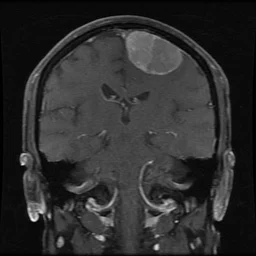
Input
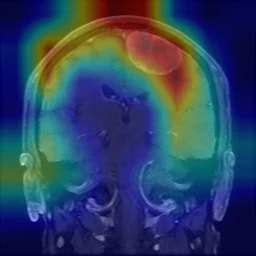
Grad-CAM
Model-predicted class
Meningioma96.5% calibrated
- Meningioma96.5%
- Pituitary tumor1.8%
- Glioma1.1%
- No tumor0.6%
Standard reliability
6 of 6 views agree · input not flagged
Paul et al. suggested a deep learning system for the purpose of classifying brain images containing several types of tumours, including meningioma, glioma, and pituitary.PMC9933351
Verified against its source · Contemporary Oncology, 2022 · CC BY-NC-SA
- 93.4%
- accuracy on the full 1,600-image test set
- 89.4%
- on test images with no near-copy in training
- 41 ms
- per image with Grad-CAM, on CPU
- 241
- openly licensed papers behind every citation
The headline number, and what it actually measured
The 2024 paper reported 99.844% for EfficientNetB3. Re-running it showed that figure came from 640 of the 1,311 test images, and that 44.6% of test images have a near-duplicate in training. The model was retrained on a leakage-safe split and measured on CPU with the exact preprocessing the platform serves.
Methods and per-class results| Figure | Source | Accuracy |
|---|---|---|
| EfficientNetB3, 640 test images | Reported by the paper | 99.844% |
| Retrained model, full test set (1,600) | Measured | 93.4% |
| Test images with no near-copy in training (886) | Measured | 89.4% |
| Separate public MRI dataset (253) | Measured | 72.7% |
One analysis, four stages, every step traced
Each analysis is a stateful LangGraph run. The judging and checking are plain code rather than a language model, and a flagged result waits for a person before it is reported.
- 01
Check
- Validate the upload
- Classify with 6 augmented views
Rules and the model
- 02
Judge
- Score reliability against measured weaknesses
Deterministic rules
- 03
Ground
- Retrieve literature
- Explain
- Verify every claim and number
Search, Gemini or quotes, rules
- 04
Decide
- Pause for a reviewer when flagged
- Write the report
A person, then rules
Explore
The language-model, retrieval and agent features are new engineering; they were not part of the published study.